The Intelligent Fabric of Modern Radio
Super Hi-Fi introduces an Object-Graph Architecture where intelligence lives inside every element of the broadcast chain, enabling an unlimited number of localized outputs from a single, unified system.


Executive Summary
Radio’s Old Brain is Broken.
Legacy radio systems were never designed for intelligence. Super Hi-Fi's Object-Graph Architecture replaces static automation with a living, adaptive broadcast fabric.
Intelligence, Not Automation.
Every song, category, clock, voice track, and station becomes a self-aware object, with each carrying unique context, logic, and relationships across the entire network.
The End of Static Radio.
Radio evolves from manual rules, silos and user-defined step-by-step instructions into a cognitive network that continuously optimizes itself to deliver desired outcomes.
One System. Many Outputs.
Define intent once. The system orchestrates everything and adapts in real time to deliver an unlimited number of localized or personalized outputs without added complexity.
The Problem
Why traditional radio automation systems fail to scale with modern demands.
Legacy Systems
- Content Management
Manual file transfers, rigid schemas
- Localization
Copied logs and rules per station
- Updates
Batch processes, delayed propagation
- Relationships
Hard-coded, brittle dependencies
- Scalability
Manual per-station effort
Modern Smart Object Architecture
- Content Management
Smart objects with embedded logic
- Localization
Single source, instant propagation
- Updates
Real-time, event-driven changes
- Relationships
Dynamic object graph, self-aware
- Scalability
Elastic scale without duplication
Core Concept
The Object-Graph Architecture
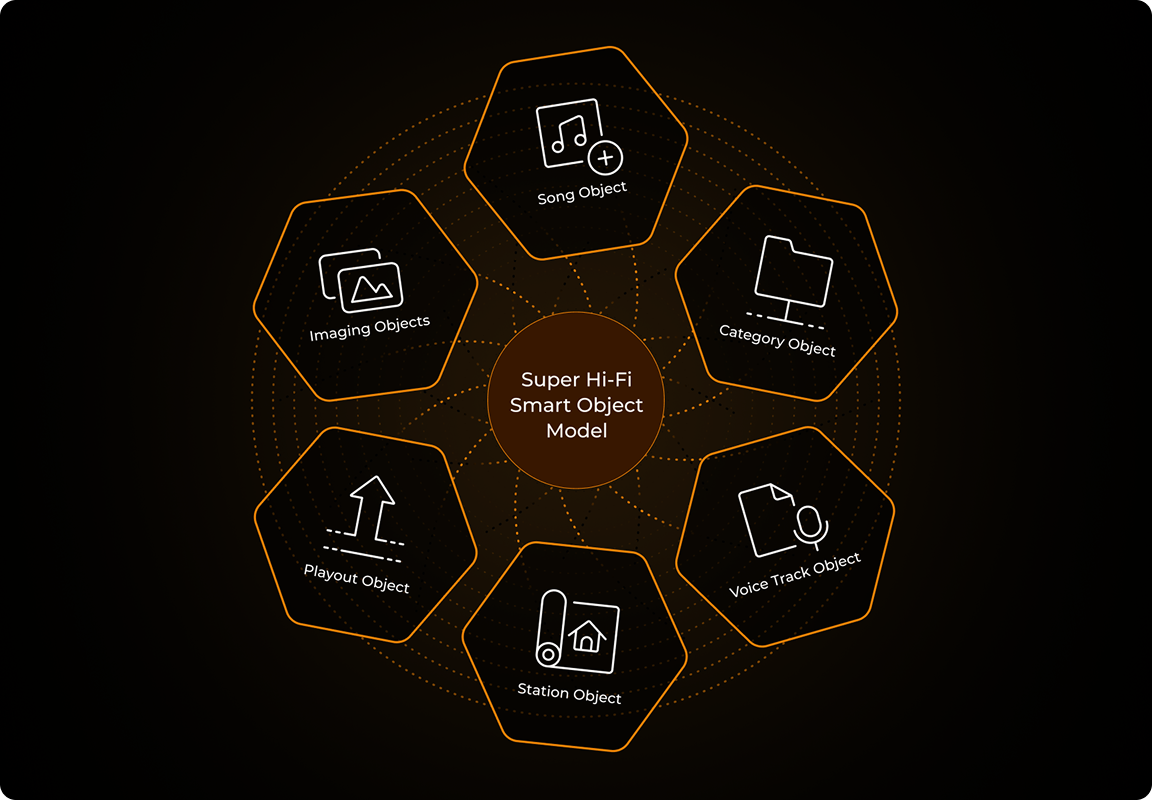
Everything as a Smart Object
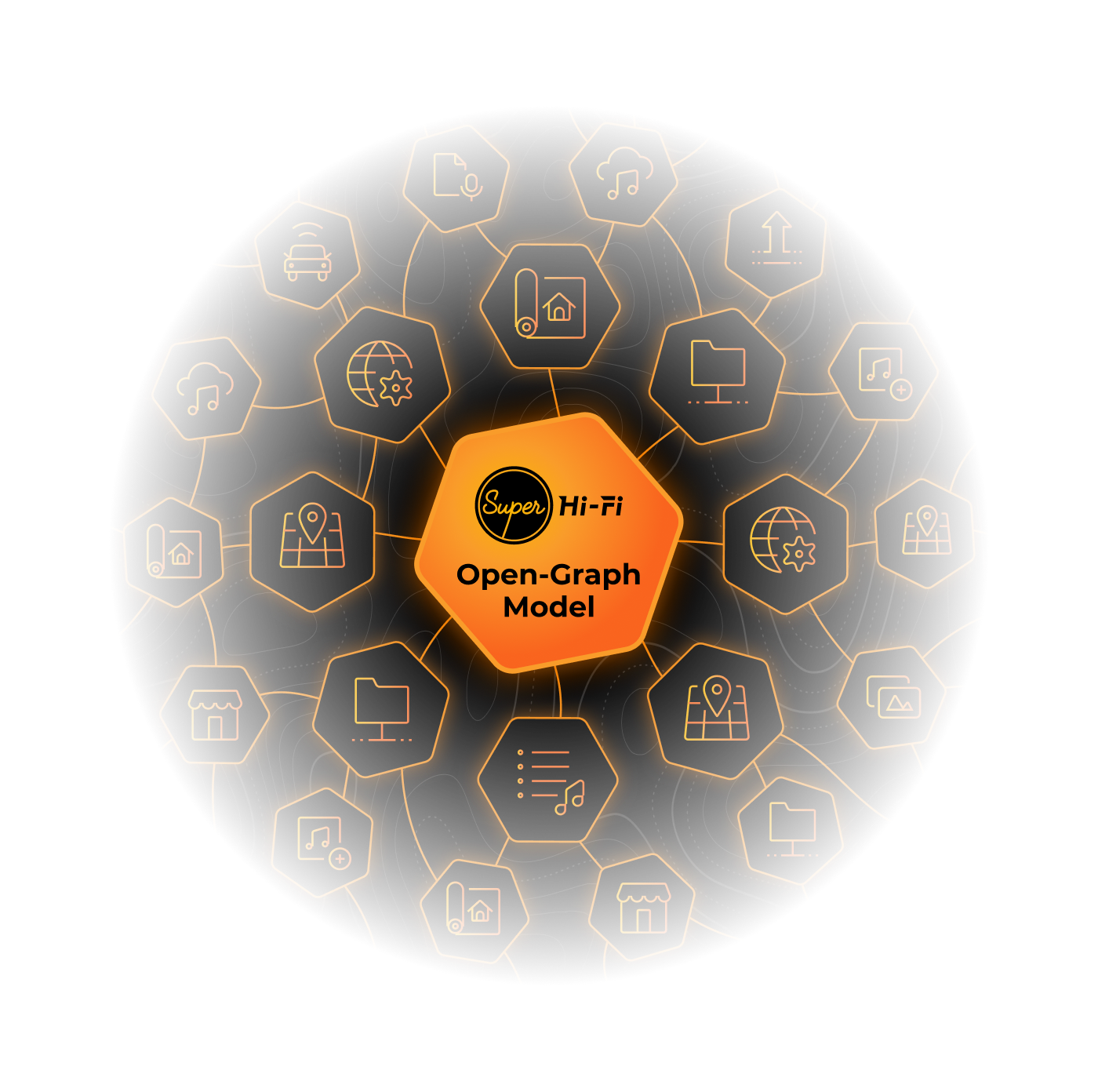
At the core of the platform is a simple mandate: every element of radio exists as a smart object. Every song, ad, schedule, station, and rule becomes a self-describing, context-aware entity.
Unlike traditional database records, smart objects understand their role, purpose, and relationships. They carry their own intelligence and can adapt to changing contexts without manual reprogramming.
The Living Object Graph
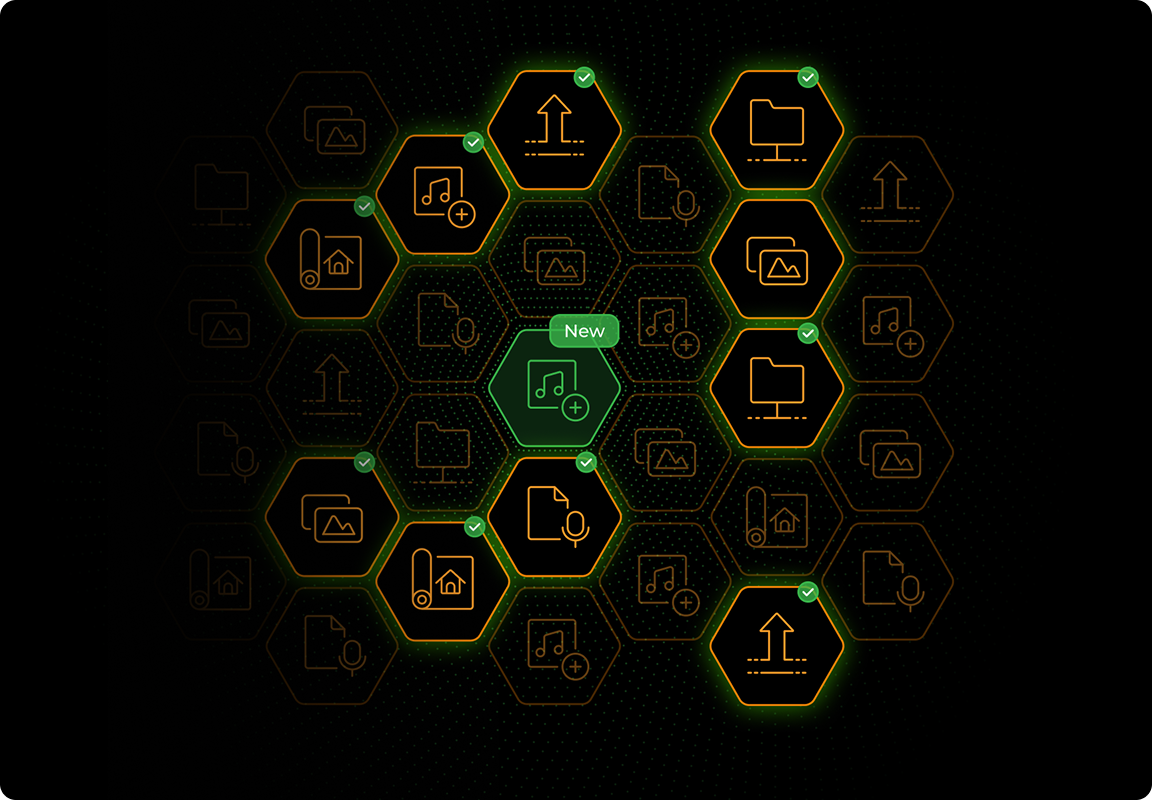
Smart objects don't operate in isolation. They form a dynamic Object Graph: a real-time network of relationships where every element knows its dependencies and dependents.
When one object changes, the graph propagates that change to all related nodes in near real-time. A single content update can automatically cascade across hundreds of stations without manual intervention.
Cognitive Orchestration
The system moves from executing commands to understanding intent. Operators define desired outcomes, not step-by-step instructions. The platform continuously interprets context, anticipates needs, and self-corrects.
This is not automation... it's orchestration. The system thinks, adapts, and optimizes in real time, handling complexity that would be impossible to manage manually.

System Model
How the Object-Graph Works
Smart Objects
Every piece of content, every rule, every station configuration exists as a smart object. These objects are not passive data - they are active entities with embedded intelligence.
Each object knows:
Its purpose and function
Its relationships to other objects
Its constraints and rules
Its current state and history
Relationship Graph
A dynamic network where every object understands how it connects to every other object, enabling near real-time propagation, impact awareness, and system-wide consistency without duplication.
Each object relationship handles:
Dependency awareness
Automatic change propagation
Conflict resolution by context
Unlimited scale without duplication
Event System
A real-time, event-driven engine that replaces batch automation with continuous responsiveness, allowing the system to sense change, react immediately, and stay perfectly synchronized.
Events manage actions in real-time:
Real-time system updates
Continuous context evaluation
Automatic timing correction
No batch jobs or delays
Intelligence Layer
The cognitive core that interprets intent, evaluates constraints, and determines optimal execution in real time: continuously learning, optimizing, and self-correcting across every output.
Intelligence capabilities include:
Intent-based decision making
Real-time optimization
Automated broadcast-quality production
Continuous learning from telemetry
How It Works
From Intent to Execution
Self-Describing Entities
Operators Define Desired Outcomes
Instead of programming every station individually, operators define high-level intent by creating a canonical categories, clocks and dayparts for a given format.
The system translates these elements and their underlying intents into rules and constraints within the Object Graph to create music logs for every individual output - understanding priorities, relationships, and edge cases without requiring explicit instructions for every scenario.
No manual music log creation
No station-by-station configuration
No repetitive scheduling tasks
System Processes
The Graph Executes Intelligently
The Object Graph continuously evaluates context: time of day, audience demographics, content availability, compliance requirements, and station-specific overrides. It synthesizes these factors in real time to determine optimal outcomes.
Events flow through the system: a song ends, a daypart changes, breaking news arrives. Each event triggers a cascade of intelligent responses across all affected stations and outputs.
Continuous Optimization
Self-Correcting and Learning
The system doesn't just execute... it optimizes. It monitors performance, detects anomalies, and adjusts in real time. Timing shifts automatically. Content rotations balance perfectly. Compliance stays guaranteed.
Every action generates telemetry. The platform learns from patterns, anticipates problems, and continuously refines its decision-making. Operations shift from reactive troubleshooting to proactive management.
Architecture Overview
Super Hi-Fi operates as a cloud-native, distributed operating system for radio. Five tightly coordinated layers work together to enable cognitive orchestration at global scale.
- 1
The Intelligence Layer
The Cognitive Core: AI-driven decision engine responsible for metadata extraction, transition logic, automated production, and intent-based programming automation.
- 2
The Graph Data Fabric
The Single Source of Truth: A distributed, version-controlled object graph that maintains relationships, state history, and auditable dependency resolution across the entire system.
- 3
The Event Bus and Microservice Layer
The Communications Network: High-throughput, event-driven communications backbone that propagates changes in real time through decoupled, independently scalable microservices.
- 4
The Playout Network
The Delivery Engine: Cloud-addressable execution layer that renders final mixes and delivers synchronized output to broadcast transmitters, streams, and API endpoints.
- 5
The Observability Layer
The Feedback Loop: Real-time telemetry, analytics, and system visibility that feed continuous feedback into the Intelligence Layer for ongoing optimization.
Business Impact
Operational Efficiency
Reduce manual work by 80%. Tasks that required hours now happen in seconds. One operator can manage what previously required an entire team.
- Automated scheduling and playlist managementInstant updates across all stationsNo manual synchronization
Unlimited Scalability
Scale from one station to one thousand without linear cost increases. Add new markets, formats, and outputs instantly without additional infrastructure.
- One master system, unlimited outputsZero-touch station deploymentCloud-native auto-scaling
Innovation Velocity
Launch new formats and experiments in minutes, not months. Test localization strategies instantly. Adapt to market changes in real time.
- Rapid experimentationReal-time personalizationReal-time market adaptation
System Qualities
Resilience
Self-correcting behavior prevents cascading failures.
Observability
Every object and process emits telemetry for full system visibility.
Scalability
New outputs are created by adding nodes — not duplicating systems.
Applications Beyond Broadcast
While conceived for radio, the Object-Graph architecture extends far beyond traditional broadcast. A single intelligent network enables contextual, personalized audio across any platform or medium.
Streaming Platforms
Automates creation of “live-feel” streams, bridging the gap between algorithmic playlists and professionally produced radio.
Retail and Fitness Media
Automatically contextualizes programming based on inputs such as time, traffic, or campaign data.
Automotive and Infotainment
Delivers regionalized variants from a shared master graph.
Personalized Audio Feeds
Supports an N-to-N model where one library powers infinite, uniquely sequenced and mixed streams for individual listeners.
Go Deeper into the Architecture
Download the complete whitepaper to explore the technical architecture, implementation strategies, and real-world case studies from broadcasters who've made the transition.